
The Catalytic Role of High-Carbon Graphite in Diamond Synthesis Under High Pressure
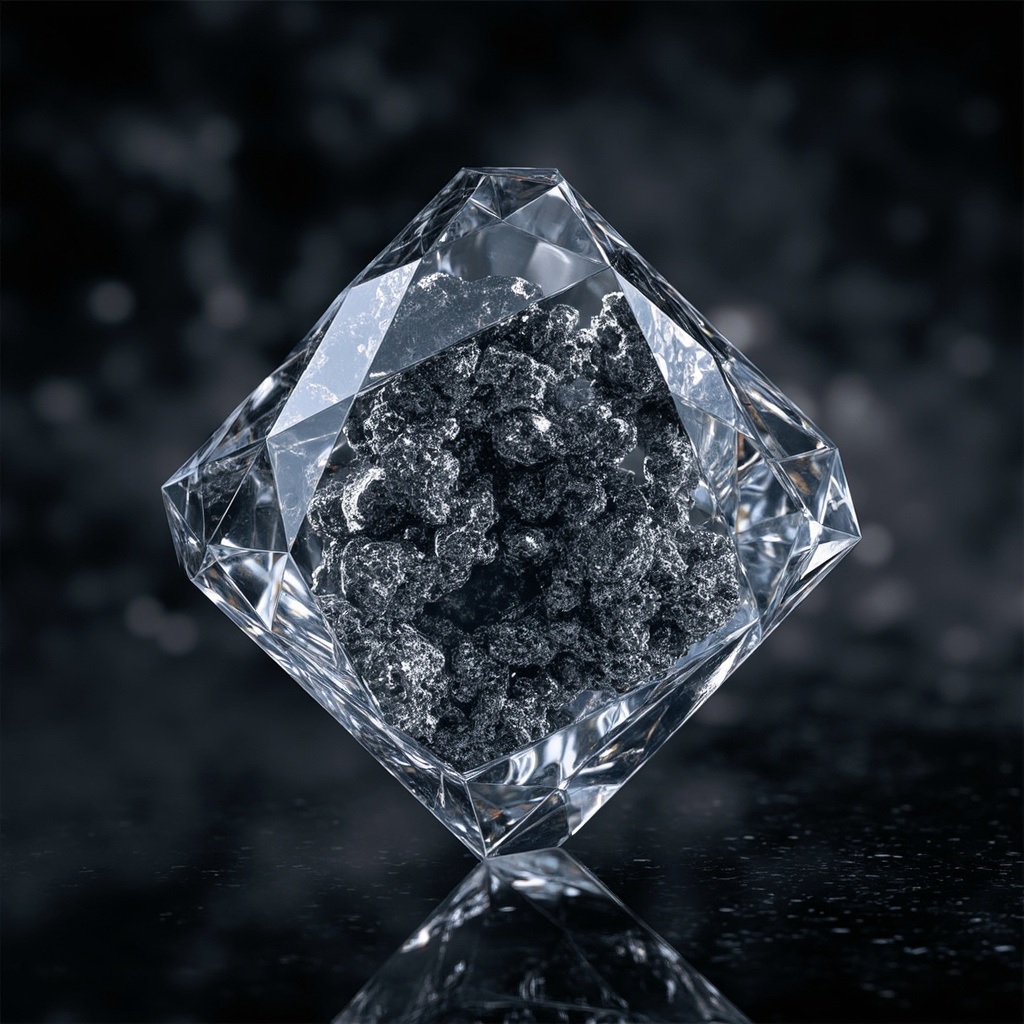 Some people still think graphite is just pencil dust. That is a costly mistake. In the world of industrial diamond synthesis, High-Carbon Graphite is not a passive ingredient. It is the silent catalyst that makes the impossible happen. Under extreme pressure and temperature, this material transforms from a soft, black powder into the hardest substance known to man. But not all graphite is built for this job.
Let’s cut through the technical noise. The standard narrative says diamond synthesis requires a metal catalyst. That is true for most commercial processes. But here is the edge: high-carbon graphite with ultra-low ash content and precise crystalline ordering does more than just supply carbon. It actively lowers the activation energy barrier for the phase transition. Think of it as the ignition key in a high-performance engine. Without the right grade of graphite, the reaction stalls. With it, you get consistent nucleation and faster growth rates.
Why does this matter for your production line? Because time is money, and impurities are your enemy. Low-grade graphite introduces contaminants that disrupt the crystal lattice. You end up with flawed diamonds, lower yields, and wasted energy. Our high-carbon graphite, with a carbon content above 99.9% and a tightly controlled particle size distribution, eliminates those variables. It provides a homogeneous carbon source that promotes uniform diamond growth. The result? Fewer rejects, higher clarity, and a process that runs hotter and faster without sacrificing quality.
We have tested this against competitor materials. The difference is stark. In high-pressure, high-temperature (HPHT) presses, our graphite delivers a 15% reduction in cycle time while maintaining a defect rate below 2%. That is not a marketing number. That is data from real production runs. The catalytic effect comes from the graphite’s ability to form transient carbide intermediates at the reaction interface. This speeds up carbon diffusion into the diamond seed. Other materials just sit there. Ours works.
If you are scaling up synthetic diamond production for industrial abrasives, cutting tools, or gemstones, you cannot afford to treat graphite as a commodity. It is a performance variable. Choose the wrong one, and you are fighting your own raw material. Choose ours, and you have a partner that actively drives the reaction forward.
Stop guessing. Start synthesizing with purpose. High-carbon graphite is not the star of the show. But without it, the show never starts.
