
Emergency Response Methods for Controlling Arterial Bleeding
Arterial bleeding is one of the most serious medical emergencies because blood can leave the body very quickly. Knowing how to respond with calm and effective actions can help protect a person until professional care becomes available. Fast thinking, steady movements, and proper first aid techniques make a major difference during these situations.
Recognize the Signs Quickly
Arterial bleeding usually has clear warning signs that should never be ignored. Identifying the problem early allows faster action and better control of blood loss.
Common Signs Include
- Bright red blood flowing rapidly
- Blood spurting with each heartbeat
- Large amounts of blood soaking clothing
- Weakness or dizziness
- Pale or cool skin
- Confusion or trouble speaking
- Rapid breathing or fainting
Prioritize Safety First
Before helping the injured person, arterial bleed make sure the surrounding area is safe. Avoid unnecessary risks so emergency care can continue without interruption.
Important Safety Steps
- Stay calm and focused
- Use protective gloves if available
- Keep sharp objects away from the scene
- Move the injured person only if necessary
- Ask someone nearby to contact emergency services immediately
Apply Direct Pressure Immediately
Direct pressure is one of the fastest and most effective ways to slow arterial bleeding. Strong and continuous pressure helps reduce blood flow from the wound.
How to Use Direct Pressure
- Place a clean cloth or bandage over the wound
- Press firmly using both hands if needed
- Maintain constant pressure without lifting the material
- Add extra layers if blood soaks through
- Encourage the injured person to remain still
Continuous pressure is often highly effective when started quickly and maintained properly.
Elevate the Injured Area Carefully
If possible, raising the injured limb slightly above heart level may help reduce bleeding. This method works best alongside direct pressure.
Helpful Tips
- Support the limb gently
- Avoid sudden movement
- Do not force painful positions
- Keep the body relaxed and stable
Elevation should never delay direct pressure or emergency assistance.
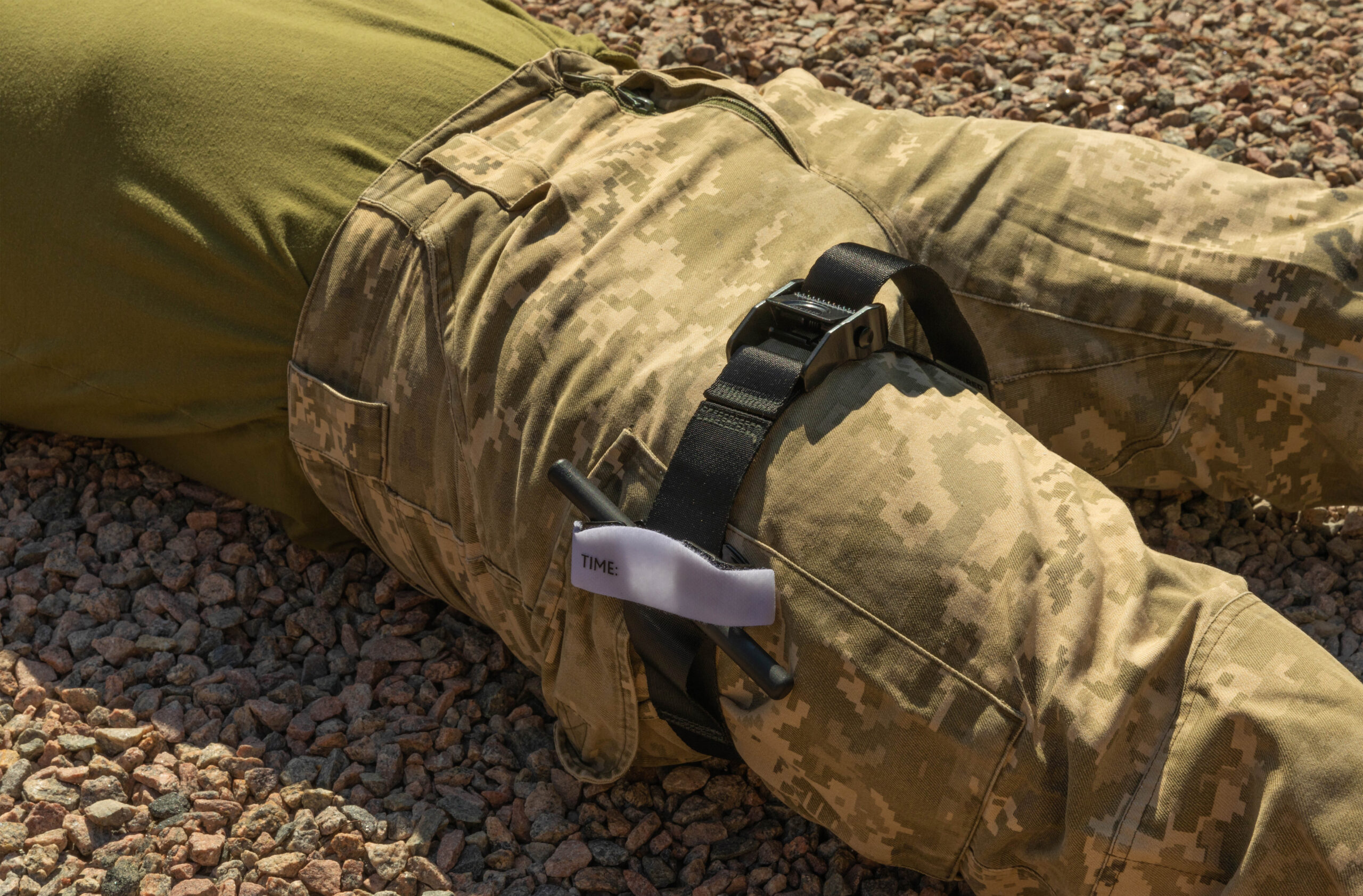
Use A Tourniquet When Necessary
Severe arterial bleeding from arms or legs may require a tourniquet if direct pressure alone does not stop the blood flow.
Correct Tourniquet Guidelines
- Place it above the wound, not directly over a joint
- Tighten until bleeding slows significantly
- Secure it firmly to prevent loosening
- Note the application time if possible
- Keep monitoring the person closely
Tourniquets can be life saving when used correctly during major bleeding emergencies.
Monitor the Person for Shock
Heavy blood loss may lead to shock, which requires immediate attention. Watching for changes in condition helps maintain safety while waiting for advanced care.
Signs of Shock
- Rapid heartbeat
- Cold or clammy skin
- Extreme weakness
- Restlessness or anxiety
- Shallow breathing
- Loss of consciousness
Ways to Provide Comfort
- Keep the person warm with a blanket
- Speak calmly and reassuringly
- Encourage slow breathing
- Prevent unnecessary movement
Continue Care until Help Arrives
Never stop monitoring the injured person after bleeding slows. Consistent observation supports recovery and improves overall safety.
Final Emergency Response Reminders
- Stay calm throughout the situation
- Keep pressure steady
- Watch breathing and awareness levels
- Avoid removing blood soaked dressings
- Follow emergency instructions carefully
Prepared actions, quick thinking, and steady first aid methods can greatly improve outcomes during arterial bleeding emergencies. Knowledge and confidence are powerful tools when every second matter.
